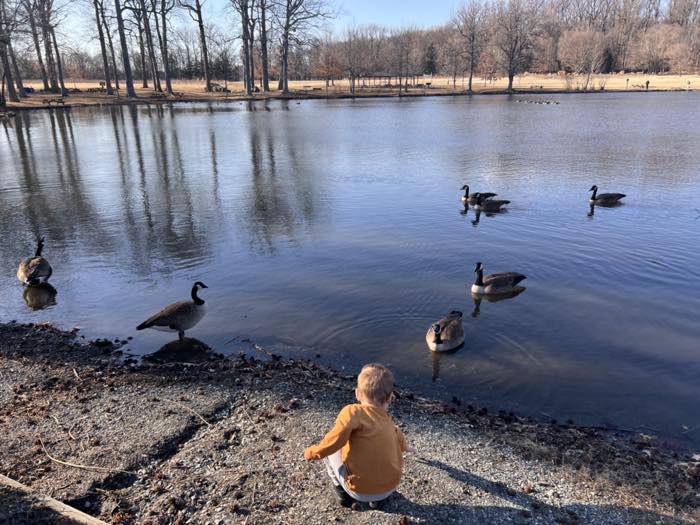
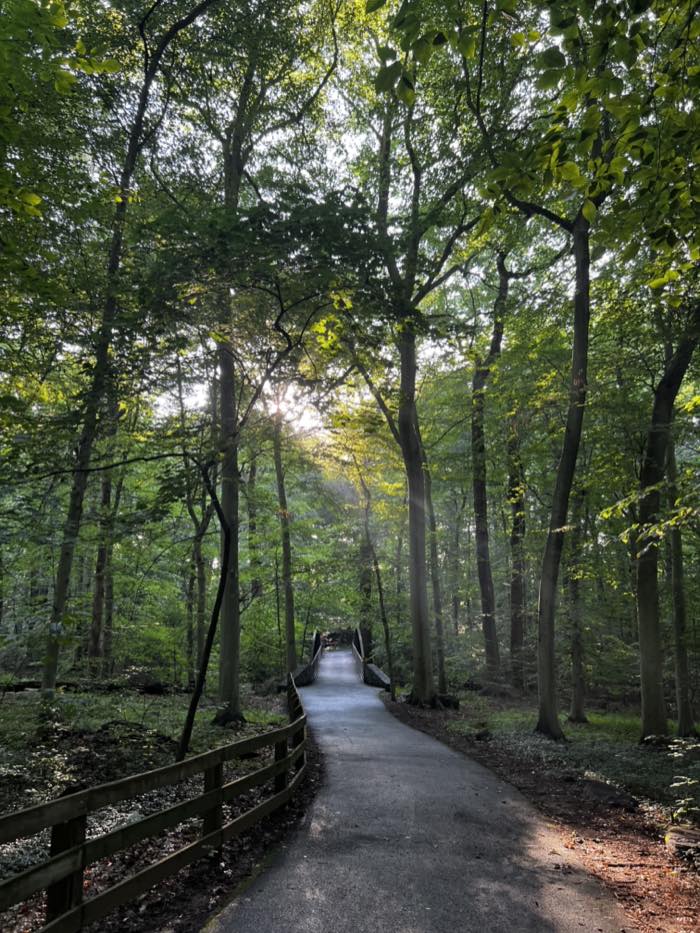
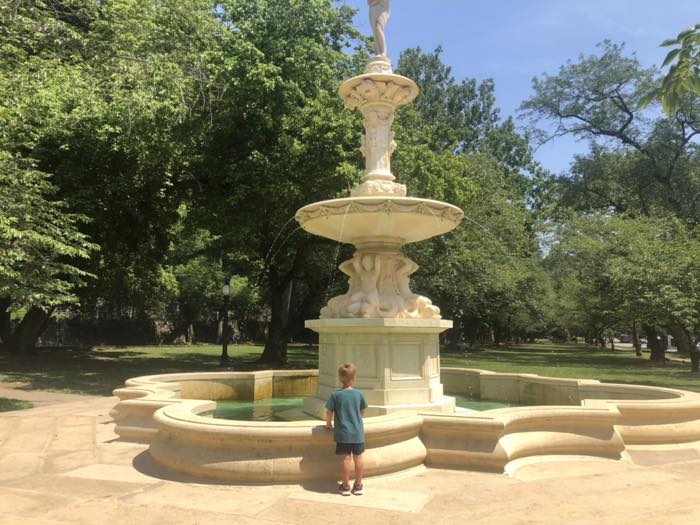
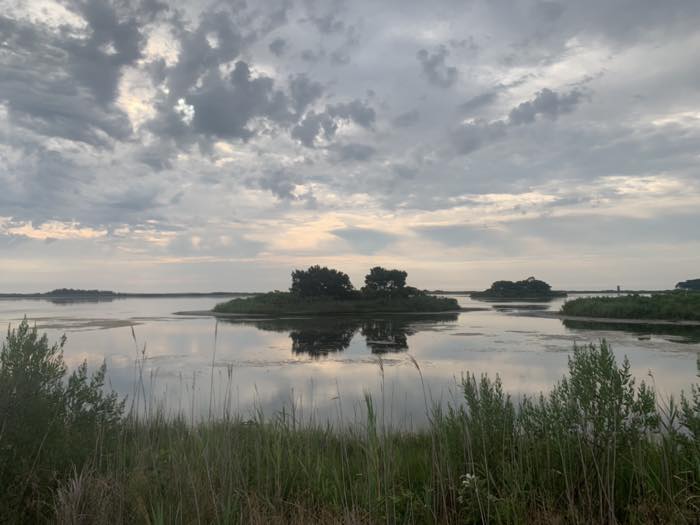
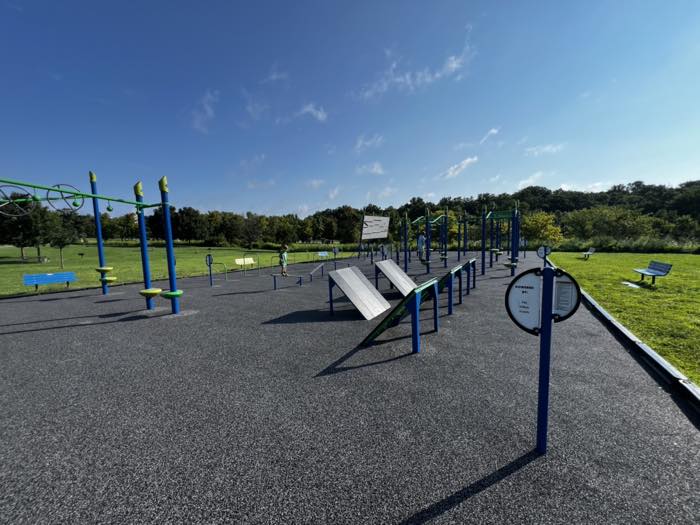
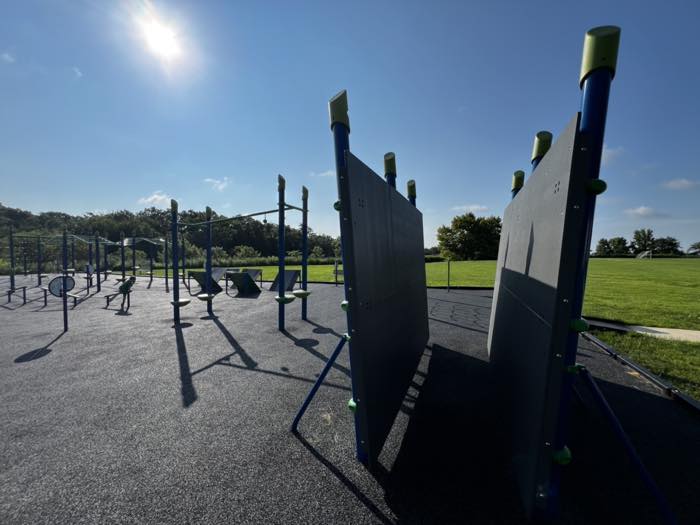
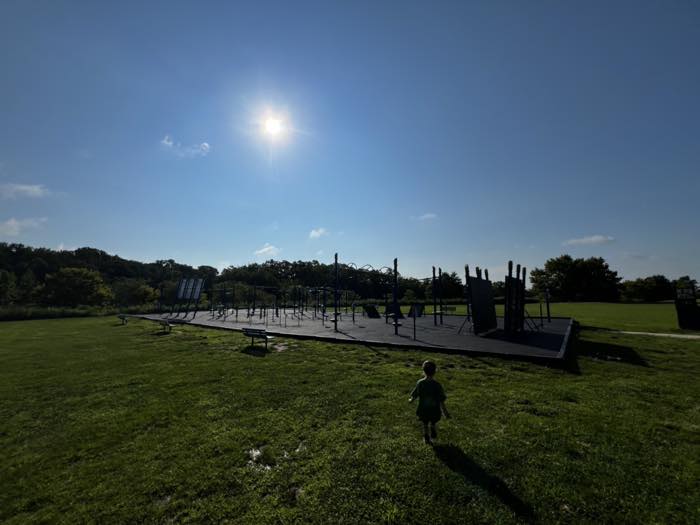
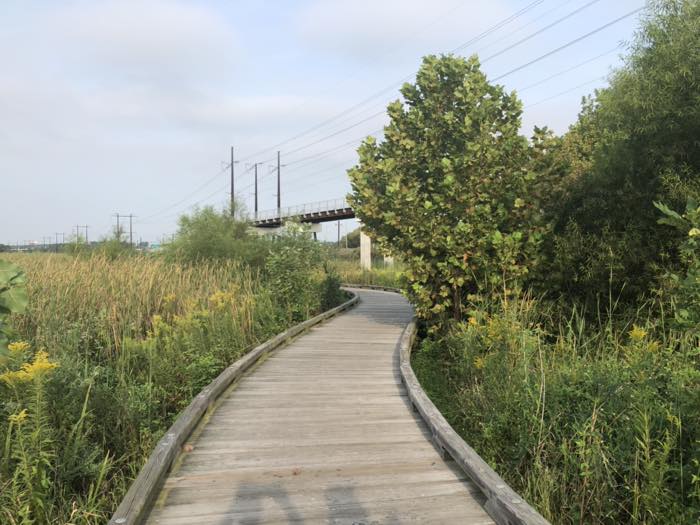
Seventeen parks and roughly 23,000 acres, from a Civil War island you can only reach by ferry to the northernmost bald cypress swamp in the country. What's actually at each one, what it costs, and whether the dog can come.
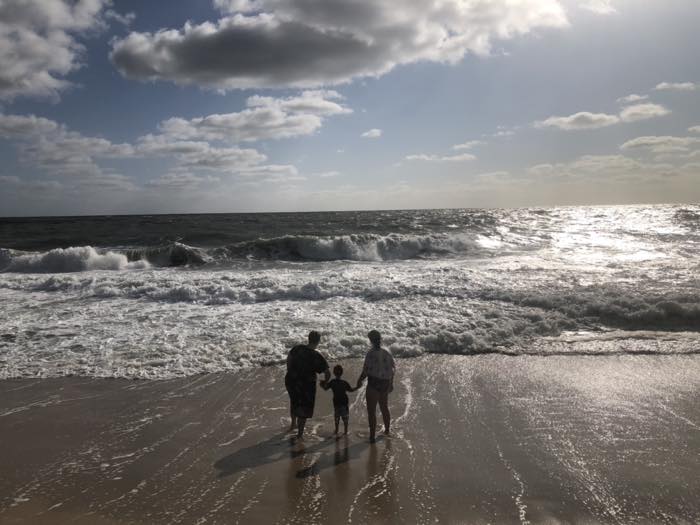
The biggest park in the state and the one where the Delaware Bay meets the Atlantic. Great Dune, WWII observation towers, a fishing pier, and a campground with a bike loop down to the beaches. The point is a genuinely wild stretch of coast twenty minutes from Rehoboth.
Beach
Guarded swimming
Surf fishing
Camping
Trails
Pier
Disc golf
The Point closed on 1 March 2026 for nesting and migrating birds. The ocean-side beach reopens 1 September and the bayside beach 1 October. This is separate from the guarded-swimming season — the park can be open, the swimming beach guarded, and The Point still shut.
Six miles of barrier island between Dewey and Bethany, ocean on one side and Rehoboth and Indian River bays on the other. The Indian River Inlet cuts through the middle of it. This is where most of the drive-on surf fishing happens.
Beach
Guarded swimming
Surf fishing
Camping
Boat launch
Discarded fishhooks and cut monofilament line on the drive-on beaches.
A quiet three-mile strip between Bethany and the Maryland line, immediately north of the Fenwick Island town beach. Ocean on one side, Little Assawoman Bay on the other. Much less crowded than the parks above it.
Small and quiet on the south shore of Indian River Bay. Known for crabbing and clamming off the pier rather than for swimming. The bay here is shallow and warm.
The northernmost natural stand of bald cypress in the United States, growing straight out of the water. Best seen from a canoe or kayak. Campground, cabins and a boardwalk trail through the swamp.
Camping
Cabins
Trails
Boat launch
Disc golf
Kayak or canoe
Millpond. Harmful algal blooms peak here in late summer.
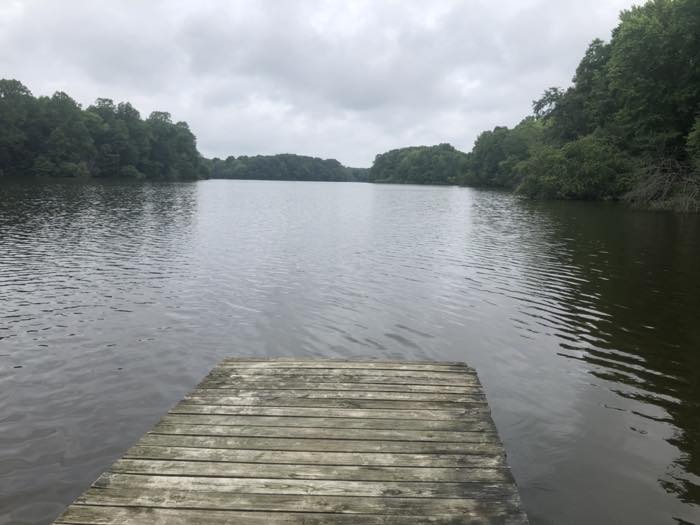
A 66-acre millpond with a trail all the way round it, plus the state's only water park, a campground and cabins. The most family-oriented park in the system.
Delaware's “park without boundaries”. Not a single site but a linked set of historic buildings and green spaces around Dover's Green, run with other state and city agencies.
Not a conventional park — it's a set of separate sites, so plan around individual building hours.
The largest freshwater pond in Delaware, formed to feed the Chesapeake and Delaware Canal. Campground, a long shoreline trail, an aerial ropes course, and the best-reviewed dog area in the state.
Beach
Camping
Trails
Boat launch
Boat rentals
Disc golf
Ropes course
Horse trails
Restrooms
The off-leash area is not fenced. Reliable recall required.
Thirty-odd miles of trail along a designated Wild and Scenic river, running up into Pennsylvania. The best hiking in the state, and the closest thing Delaware has to a proper woodland walk.
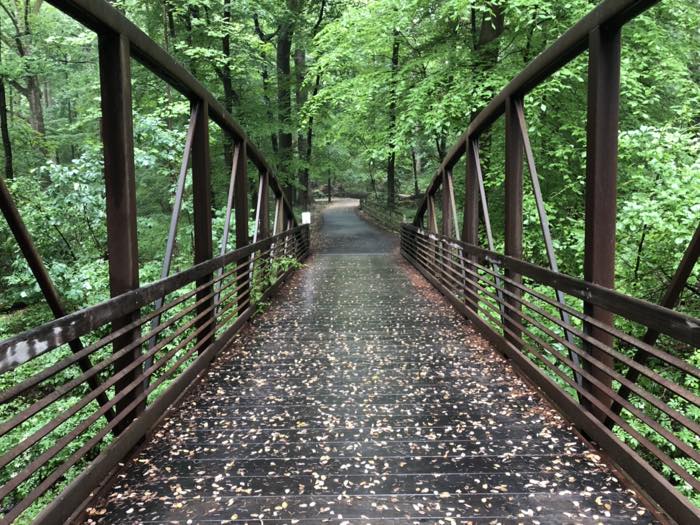
A big former du Pont dairy farm fifteen minutes from downtown Wilmington, open year round. A large trail system, including a paved walking path that runs through the woods along the creek. Stone walls, tulip poplars, an autumn hawk watch, a boat launch and disc golf. Several entrances and more than one set of restrooms.
A wooded gorge on the Brandywine with a blue rock quarry face used for climbing, plus the Blue Ball Barn. Sits on the Northern Delaware Greenway.
Trails
Playground
Climbing wall
Restrooms
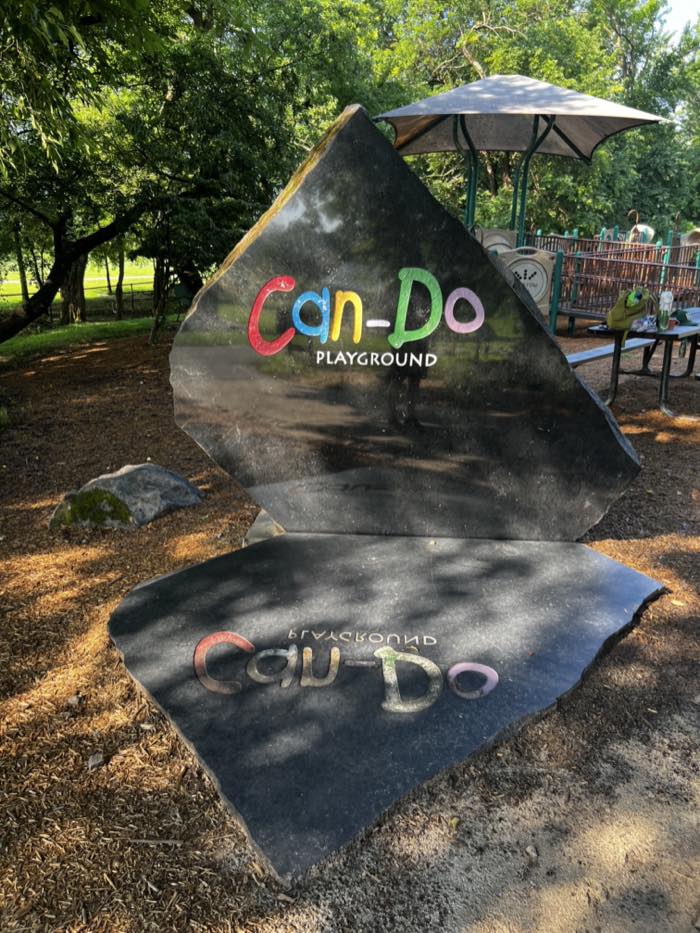
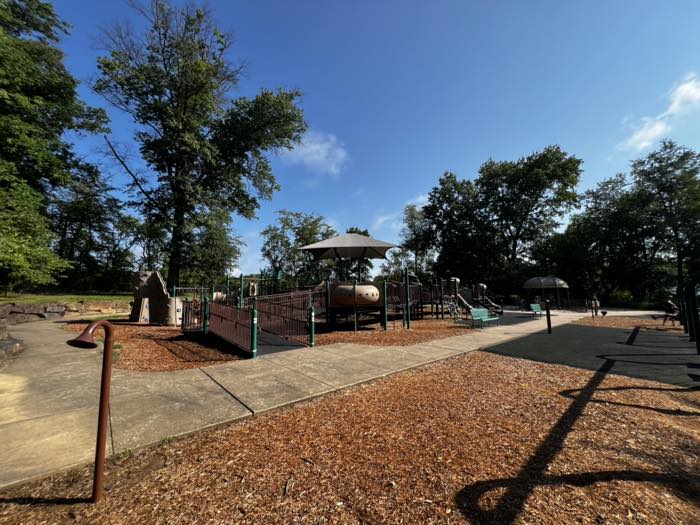
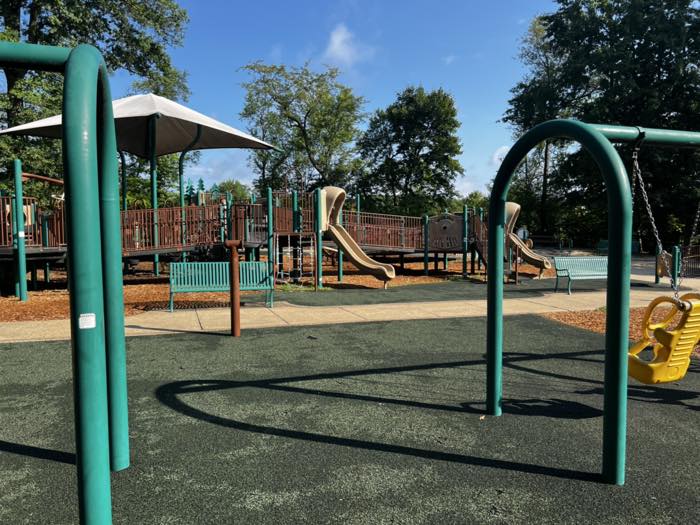
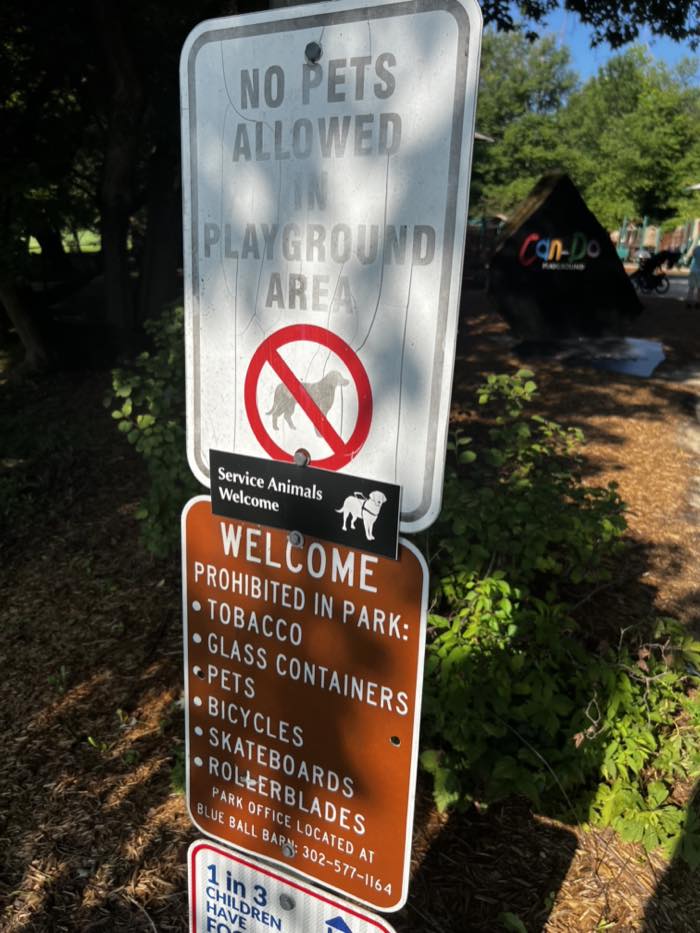
No dogs at the playground. The sign at the entrance says "No pets allowed in playground area", and the park's own board lists pets among the things prohibited — along with bicycles, skateboards, rollerblades, glass and tobacco. Service animals are explicitly welcome.
The linked city parks along the Brandywine: Brandywine Park, Rockford Park with its tower, H. Fletcher Brown Park and the Riverfront. Urban walking rather than wilderness, and the closest state parkland to downtown.
A small strip on the Delaware River north of Wilmington, built on reclaimed land. Flat paved walking with big open river views and a lot of ship traffic.
A Civil War fortress on Pea Patch Island, reached only by ferry from Delaware City. The island also holds one of the largest wading bird nesting grounds on the east coast.
Trails
Ferry-only access. Seasonal, and the last boat back is the last boat back.
A former coastal defense installation and later a hospital site on the Delaware River at Delaware City, now partly redeveloped. Trails, remnant batteries, and a view across to Pea Patch Island.
The Marshall family's Auburn Heights estate, with a steam car museum and a working miniature railroad. Open on a limited schedule, so check before driving out.
Trails
Limited opening. Confirm before going.
$5 in-state · $10 out-of-state→
What it costs in 2026
Entry fees rose on 1 March 2026 and the beach parks roughly doubled. Most published guides still quote the old numbers, so budget from this instead of from a blog post.
Beach parks — in-state vehicle
$10 / day
Beach parks — out-of-state
$20 / day
Inland parks — in-state
$5 / day
Inland parks — out-of-state
$10 / day
Annual pass — in-state
$50
Annual pass — out-of-state
$100
Lifetime pass — DE residents 65+
$150
Charged 1 March – 30 November. Seniors and military get 50% off the annual pass. Surf-fishing permits are priced separately.
Dogs, in one line
Generally allowed on a leash of six feet or less, all year —except on swimming and sunbathing beaches between May 1 and September 30, and at Beach Plum Island, which is closed to pets year-round. That beach exception is narrower than almost every guide reports it, and the state publishes other area-specific exclusions besides, so "everywhere" was doing more work than it could carry.The full rule is in the dog section.
How complete this is
Every card shows how many of its nine facilities are confirmed. A field reading Not confirmed means I haven't checked it — it doesn't mean the park lacks the thing. Park office numbers and seasonal hours are the biggest gap and they're all on the call list.
Know someone who'd find this useful? Send it their way. It might save them a wasted trip, give a dog somewhere to run, or help keep the kids busy when it rains.